
#freewill
An Analysis of Folk Free Will

On Instagram, hundreds of thousands of posts are tagged with “#freewill.” Such posts are an interesting object of analysis because free will is passionately debated among philosophers, so one may wonder: is the “free will” referred to by laypeople distinct from philosophical definitions? And if so, how? To answer these questions, in what follows, I analyze and explain folk free will according to its usage in various Instagram Reels tagged with “#freewill,” then describe how it differs from philosophical usages of free will.
What is Folk Free Will?
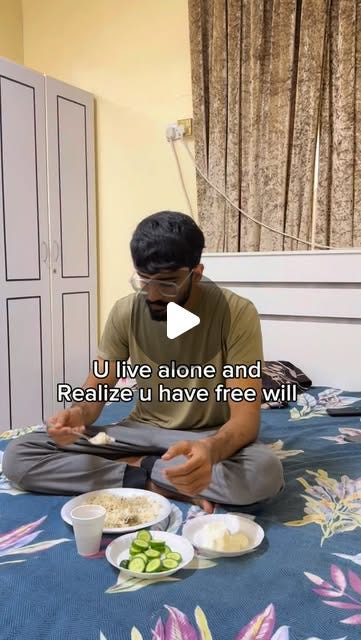
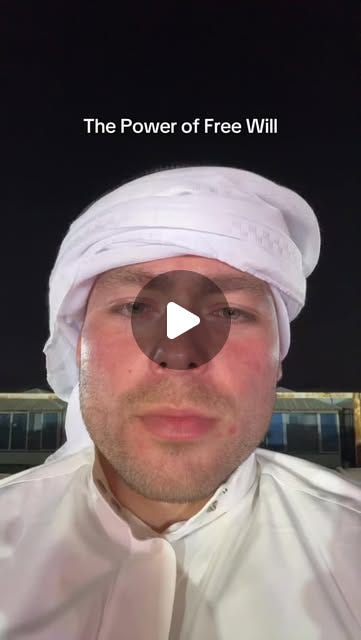
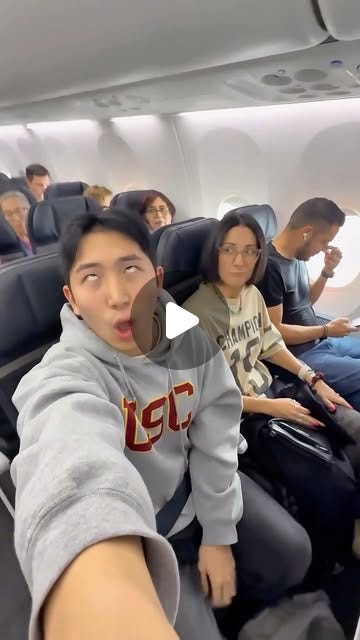
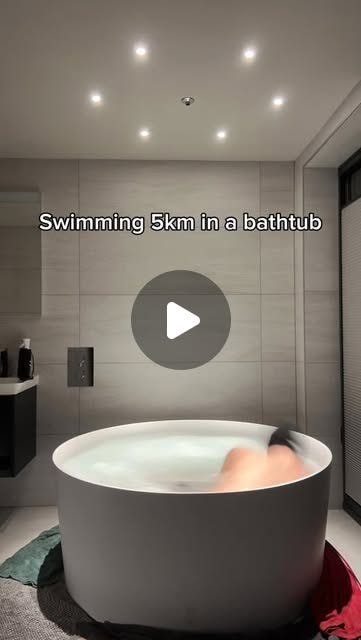
The featured Reels are tagged with “#freewill” and are paradigmatic of folk free will. Though varied, there is nevertheless a through line: that the possibilities of action are virtually boundless. Each video, for example, includes a person doing something that they otherwise would not do, likely because of societal norms, expectations, and standards. Doing otherwise is, therefore, a subversion of normality. So, insofar as an action is possible, one’s imagination is the limit.
Folk free will, as I interpret it, thereby refers to a particular state of being—one characterized by an immediate absence of physical impediments (i.e., no person or thing is preventing one from acting) and the presence of psychological willingness (i.e., given that an action is possible, one realizes it can be done and is motivated to do it). Free will, then, at least according to Instagramians, is not strictly defined by agential sourcehood; though, it may be implicitly assumed. This definition is largely synonymous with freedom and liberty; freedom meaning: “the power or right to act, speak, or think as one wants without hindrance or restraint,” and liberty meaning: “the power or scope to act as one pleases.”1
Unlike philosophical free will, folk free will is uncontroversial and pre-theoretical, as though it is an obvious truth. Assertions to the contrary may, therefore, seem asinine or absurd. For example, suppose I stated that freedom is impossible—not simply that it fails to obtain in a given context. My statement is, of course, mistaken. Freedom is not merely binary; one can be more or less free. I think folk free will is similarly regarded; one’s rejection of it is, therefore, indicative of confusion. If defined differently, though, free will may not be an obvious truth.
Philosophical Definitions of Free Will
Like many philosophical concepts, what free will is is somewhat ambiguous; there is no universally accepted, privileged definition. Despite this, several definitions share overlapping requirements regarding what is needed for free will. Those requirements are as follows: (1) “up to us-ness,” (2) sourcehood, (3) alternativity, and (4) moral responsibility. Note that not all philosophers accept each of these conditions.
“Up to us-ness” concerns our actions and choices and whether they are “up to us” or within our control. Our phenomenology (i.e., our first-person conscious experiences of the external world) is sometimes cited as evidence for this condition; for instance, a philosopher may argue that our actions and choices being “up to us” is common sense and discoverable by introspection. Empirical research on folk phenomenology of free will is limited, however.
Sourcehood concerns the origin or “source” of our actions and choices; if that source is in us rather than in anyone or anything else uncontrolled by us, then there is free will. This condition, some argue, requires agential contracausality. That is, our actions and choices must not be wholly caused by antecedents beyond our control. Here, inquiries regarding what constitutes the self arise, as what qualifies as “in us” is vague.
Alternativity concerns the ability to do otherwise and alternative possibilities. This condition is ambiguous, though, as alternativity may either refer to a categorical or a conditional ability to do otherwise. Proponents of the former argue that we could have done otherwise all things being equal, whereas proponents of the latter argue that we could have done otherwise given different antecedents.
Moral responsibility is related to the free will debate as more so a consequence rather than a requirement. It concerns praise and blameworthiness and whether we deserve reward or punishment for our doings. Many philosophers agree that free will is a necessary condition for moral responsibility, though they disagree regarding the extent and nature of free will required to judge agents as responsible.
What one thinks of these conditions will determine one’s position on the matter.
Conclusion
Instagramian folk free will, I conclude, seemingly differs from philosophical free will. This is expected, however, since philosophers regularly define words differently than laypeople. In short, Instagramians treat free will as something an agent may passively realize and exercise to subvert normality by acting of one’s own accord, whereas philosophers treat free will metaphysically, as a property of agents that either obtains or fails and is a condition for moral responsibility. Ultimately, though, speculations from the armchair are just that, speculations; whether philosophers and laypeople regard free will similarly is an empirical question.
References and Further Reading
Fischer, J. M., Kane, R., Pereboom, D., & Vargas, M. (2024). Four views on free will. John Wiley & Sons.
Kane, R. (Ed.). (2002). The Oxford handbook of free will. Oxford University Press.
Nahmias, E., Morris, S., & Nadelhoffer, T. (2004). The phenomenology of free will. Journal of consciousness studies, 11(7-8), 162-179.
Pink, T. (2004). Free will: A very short introduction. Oxford Paperbacks.
Wilson, D. (2024). Determinism and free will. Blog & Mablog Press and Tire Center.
Definitions from MacOS’s in-built dictionary.